
When returns stall, teams usually blame creative or media. But if the numbers guiding those decisions are wrong, every fix aims at the wrong target. Check measurement first.
Here is a familiar story. ROAS slides for two quarters. The agency refreshes creative, restructures campaigns, tests new audiences. Each change produces a brief flicker, then the slide resumes. Eventually someone asks an unfashionable question: what if the ROAS number itself is wrong? In our experience, that question resolves more “performance problems” than any creative sprint.
Reported ROAS is not measured ROAS
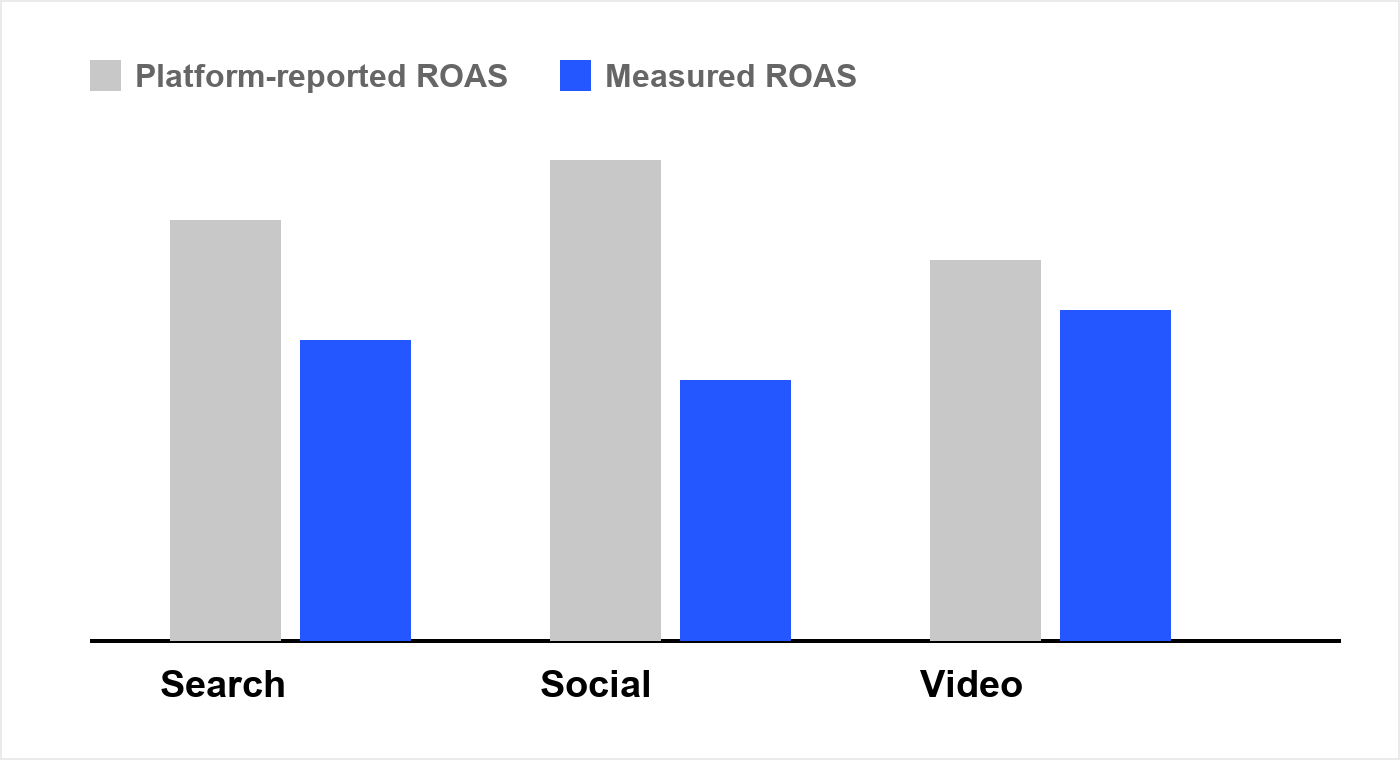
Every ad platform reports the return it can see, using the conversions it is told about, attributed by rules that flatter it. That is not a conspiracy. It is incentives plus incomplete data. Clicks get over-credited, view-through gets generous windows, modelled conversions fill gaps, and cross-device journeys get stitched optimistically. The platform number is a starting point for questions, never an answer.
Measured ROAS is different. It starts from finance-grade revenue, reconciled monthly, attributed by rules you chose deliberately. The gap between the two numbers is routinely 20 to 40 percent. Until you know your gap, you cannot know whether a channel at “3x” is profitable or burning money.
The usual suspects
- Broken conversion signals. Duplicate purchases, missing values, untracked upsells. The algorithm optimises for fiction and reports success doing it.
- Last-click comfort blankets. Credit flows to the final touchpoint, usually brand search, while the prospecting that created demand starves. Budgets follow the blanket.
- Untracked offline value. Calls, showroom visits and sales-assisted deals never reach the platform, so channels that drive them look wasteful.
- Creative testing on noise. Winners declared from unmeasured tests. The “winning” creative was often just the one the broken tracking favoured.
Fix the ruler before you argue about the measurement.
A measurement-first turnaround
When returns stall, run this sequence before touching creative or structure. First, reconcile platform revenue against finance for the last three months and size the gap per channel. Second, audit the conversion path for duplicates, missing values and consent blind spots. Third, pick attribution rules deliberately, usually a data-driven or position-aware model sanity-checked with holdout and incrementality tests. Only then optimise media.
Teams that follow this order typically find one of two things: the channel was fine and the numbers were lying, or the channel was weak and the numbers were hiding it. Both are good outcomes. Money moves to truth either way, and the creative and media work that follows finally compounds. This is the core of our performance marketing approach.
Make creative prove itself honestly
Creative still matters enormously. It is simply downstream of measurement. With clean signals, testing sprints produce real winners: hooks, angles and formats ranked by measured revenue impact, banked as learnings, scaled with budgets the business model supports. Without clean signals, testing is theatre with good slideware.
If your returns have plateaued, resist the next restructure until the numbers are verified. Review our measurement services, browse selected work, or ask us to pressure-test your ROAS.
FAQs
Our agency reports 5x ROAS. Should we believe it?
Believe it is a real platform number, then verify it against finance. Ask for the reconciliation: platform revenue versus actual revenue, per channel, monthly. A trustworthy partner welcomes that question. One that resists it is telling you something.
What is a healthy gap between reported and true ROAS?
There is no universal number, but gaps of 10 to 20 percent are common with clean tracking, and 30 percent or more signals real problems. What matters is that the gap is measured, stable and understood, not that it hits a benchmark.
Is last-click attribution really dead?
As a decision tool, mostly yes. Last-click systematically over-credits closing touchpoints like brand search and starves prospecting. Keep it as one reference view, but never let it move budgets alone. Data-driven models plus holdout tests make better guides.
Do we need incrementality testing?
If you spend seriously on any channel, yes, at least periodically. Geo holdouts and on-off tests are the only way to separate correlation from causation. Attribution models estimate; experiments answer. Run them on your biggest bets first.
Why do platforms over-report?
Partly modelling: privacy gaps get filled with estimates that skew optimistic. Partly rules: generous attribution windows and self-crediting clicks. Partly inputs: duplicate or valueless conversions you feed them. Fix your inputs first, then discount the rest deliberately.
How fast can we fix broken tracking?
An audit takes days. Core fixes like deduplication and value passing take weeks. Full maturity with server-side tagging and CRM integration is a quarter-long programme. Start spending differently the moment the audit lands, not when the programme ends.
Should we still run brand search?
Usually yes, but measure it honestly. Brand search captures demand others created, so judge it on incrementality and impression share, not the flattering ROAS it reports. Test pauses carefully before cutting it entirely.
When is it actually a creative problem?
When measurement is clean, spend is stable, and performance still slides while frequency climbs and hook rates fall. Creative fatigue is real. But rule out measurement first, because fixing creative on broken numbers wastes the one budget you cannot afford to waste.
Leave a Reply