
Growth rarely comes from one channel. It comes from connecting acquisition, measurement and optimisation into one system, then running that system with discipline.
Ask most teams where growth will come from next quarter and you will hear a channel: more paid social, a new SEO push, a bigger email programme. Channels are visible, easy to buy and easy to report on. That is exactly why they disappoint. A channel is a tactic. Growth is the product of a system in which acquisition feeds measurement, measurement directs optimisation, and optimisation earns the right to scale.
WebForth exists because we kept seeing the same failure pattern: capable teams, reasonable budgets, and growth that stalled the moment a single channel saturated. The fix was never another channel. It was always the system behind the channels.
The channel-first trap
Channel-first thinking asks the wrong question. It asks which channel deserves budget, so budget follows fashion and case studies instead of evidence. One quarter it is short-form video, the next it is retail media. Each new channel starts from zero: new creative, new learning, new reporting quirks. Nothing compounds because nothing connects.
Systems thinking asks a better question: where does growth actually break? There are only three possible answers. You are failing to acquire enough of the right customers, failing to measure what happens after you acquire them, or failing to convert the demand you already have. The answer tells you exactly where the next pound or dollar should go.
Most agencies sell channels. Growth comes from the system behind them.
The four layers
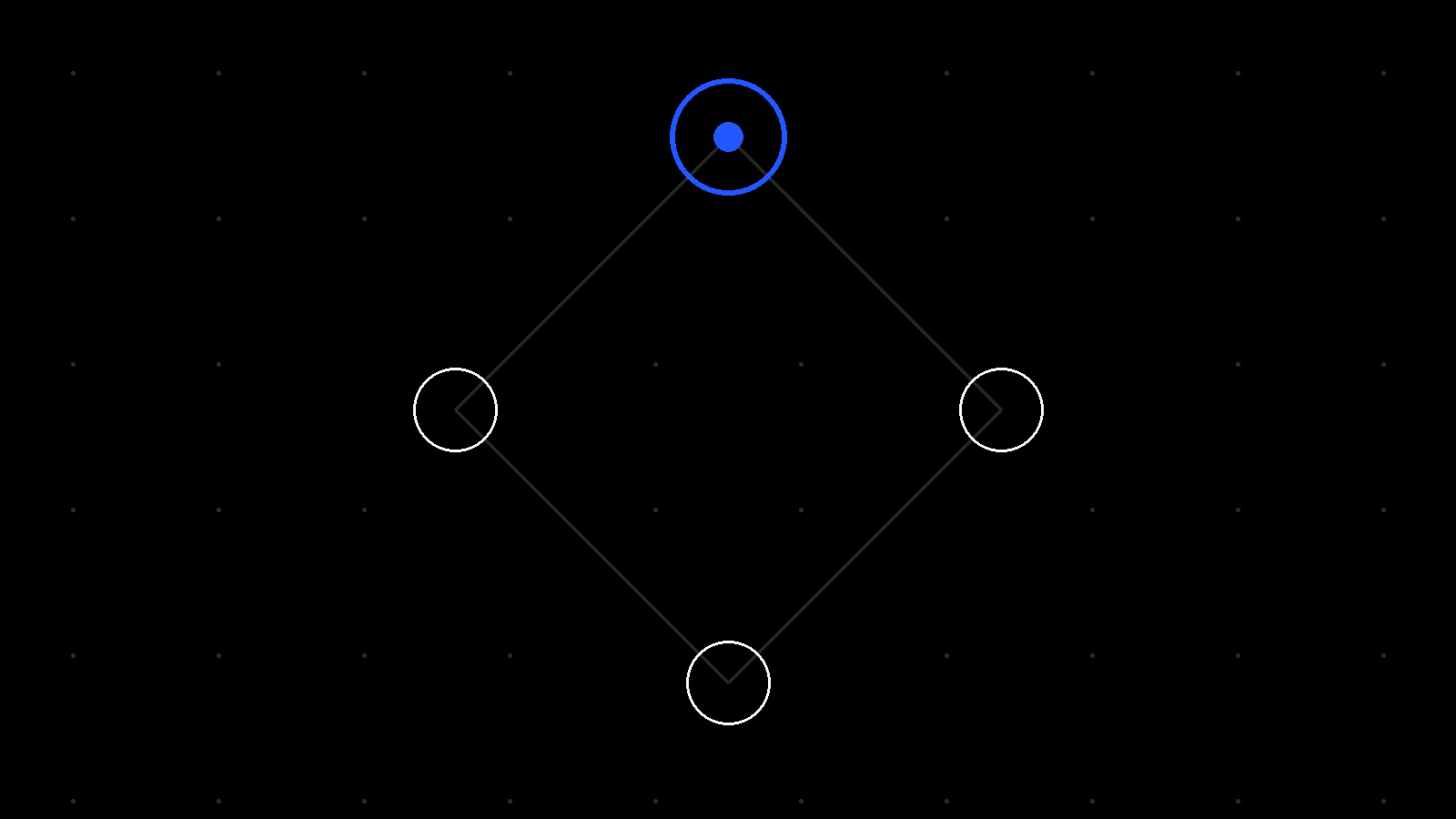
Every growth system we build has the same four layers. They are simple to describe and demanding to run well.
Acquire
Paid media and demand generation aimed at the right customers, not the cheapest clicks. The job of acquisition is to buy well-defined demand at a price the business model supports. That requires clear audience definitions, creative testing and campaign structures that give platforms room to learn. See performance marketing for how this layer runs.
Measure
Analytics, tracking and attribution you can trust. Measurement is the layer most teams skip and the one that decides everything downstream. Without it, every budget decision is a guess and every test result is suspect. Tracking plans, conversion signals and CRM integration come before scale, not after.
Optimise
Conversion work and experimentation driven by real data. Optimisation turns measurement into money: landing pages, funnels, offers and creative, tested in a structured programme rather than changed on opinion. Small conversion gains multiply across every channel at once, which is why this layer has the highest leverage in the system.
Scale
More investment in what is proven, in new markets and across the lifecycle. Scaling is the reward for the first three layers working, never a substitute for them. Unit economics are proven first then growth strategy extends them into new audiences, geographies and lifecycle stages.
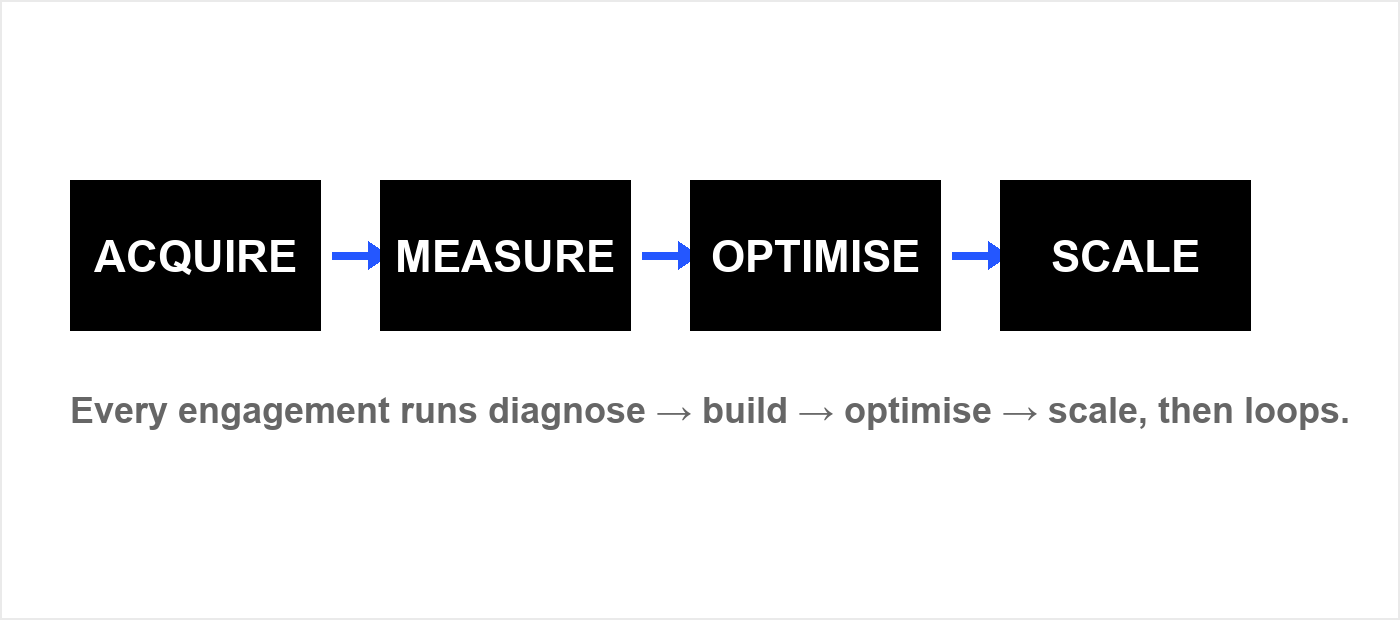
Run it as an operating rhythm
Diagnose, build, optimise, scale, then loop. Each cycle improves the system itself: better tracking produces better tests, better tests produce better conversion, better conversion funds bolder acquisition. Growth compounds instead of resetting every quarter. That is what “growth is a system” means in practice.
The rhythm also protects you from the two classic failure modes. Moving too fast means scaling unmeasured spend. Moving too slow means analysing instead of acting. A fixed cadence of diagnosis, builds, experiments and scale decisions keeps investment tied to evidence without freezing it.
What to do on Monday
- Write down where growth breaks: acquisition, measurement or conversion. Be specific.
- Audit the layer beneath your weakest one. Weak acquisition often means weak measurement.
- Stop any spend you cannot trace to revenue, and fix the tracing before restoring it.
- Start one structured experiment in the layer you can change fastest, usually conversion.
If the diagnosis points somewhere uncomfortable, that is useful information. Read how we work, look at selected work, or start a conversation about the system behind your stall.
FAQs
What exactly is a growth system?
A growth system is the connected set of acquisition, measurement and optimisation capabilities behind revenue. Channels plug into it. When the layers share data and decisions, each one makes the others stronger, and growth compounds instead of depending on a single channel performing.
How is this different from hiring a performance agency?
A performance agency typically owns one layer, usually paid media. A systems approach owns the connections: tracking that makes media measurable, experimentation that turns data into conversion gains, and strategy that decides what scales. The difference shows up when a channel stalls and you need to know why.
We already do SEO, paid and email. Is that a system?
Only if they share measurement and decisions. A quick test: can you trace a pound of email revenue and a pound of paid revenue back to the same conversion data, and do learnings from one change how you run the other? If not, you have three channels, not a system.
Which layer should we fix first?
Start with diagnosis, but expect measurement to come first in practice. You cannot fix acquisition efficiently without trusted tracking, and you cannot optimise conversion without data. Measurement is the least glamorous layer and the one that unlocks the other two.
How long before a system shows results?
Diagnosis and measurement fixes usually land in the first month. Optimisation wins follow as tests complete, typically within one to two quarters. Scaling is gated on proven unit economics, so it arrives when the evidence supports it rather than on a fixed date.
Does this work for small budgets?
Yes, and small budgets need it most. With limited spend there is no room for unmeasured waste. The layers stay the same; the scope shrinks. One channel, clean tracking and a tight testing loop beats five channels run on guesswork.
What does the operating rhythm cost in team time?
Less than firefighting channels each week. A fixed cadence means one diagnosis session, one build list, one experiment readout and one scale decision per cycle. Most teams spend a few focused hours per week once the rhythm is established.
How do we know the system is working?
Three signals: acquisition costs move in the right direction at stable or growing volume, every budget decision cites measured evidence, and tests regularly change what you do. If all three hold for two consecutive quarters, the system is compounding.
Leave a Reply